






Disclosure: some links in this article may be affiliate links. If you sign up through them we may earn a commission at no extra cost to you. Read our affiliate disclosure.
Important: cryptocurrencies are highly volatile and risky. Prices can fall sharply and suddenly, and you could lose all the money you put in. Crypto may be lightly regulated or unregulated where you live, which means you may have little protection if something goes wrong. This guide is for education only and is not investment advice. Read our disclaimer.
Cryptocurrency has gone from an internet experiment to something discussed on the evening news, by governments and by major financial institutions. Some people see it as the future of money; others see it as a speculative bubble. Wherever you land, it pays to understand how it actually works before you buy any, and especially to understand the risks.
This guide explains crypto in plain English: what it is, how it works, how to buy and store it safely, and the scams and mistakes that catch beginners out.
In this guide
- What is cryptocurrency?
- How does a blockchain work?
- The main types of crypto
- Why do people buy crypto?
- The real risks of crypto
- How to buy crypto safely: step by step
- Crypto wallets explained
- Common crypto scams to avoid
- Do you have to pay tax on crypto?
- My approach: crypto is the small, high-risk slice
- Frequently asked questions
- The bottom line
What is cryptocurrency?
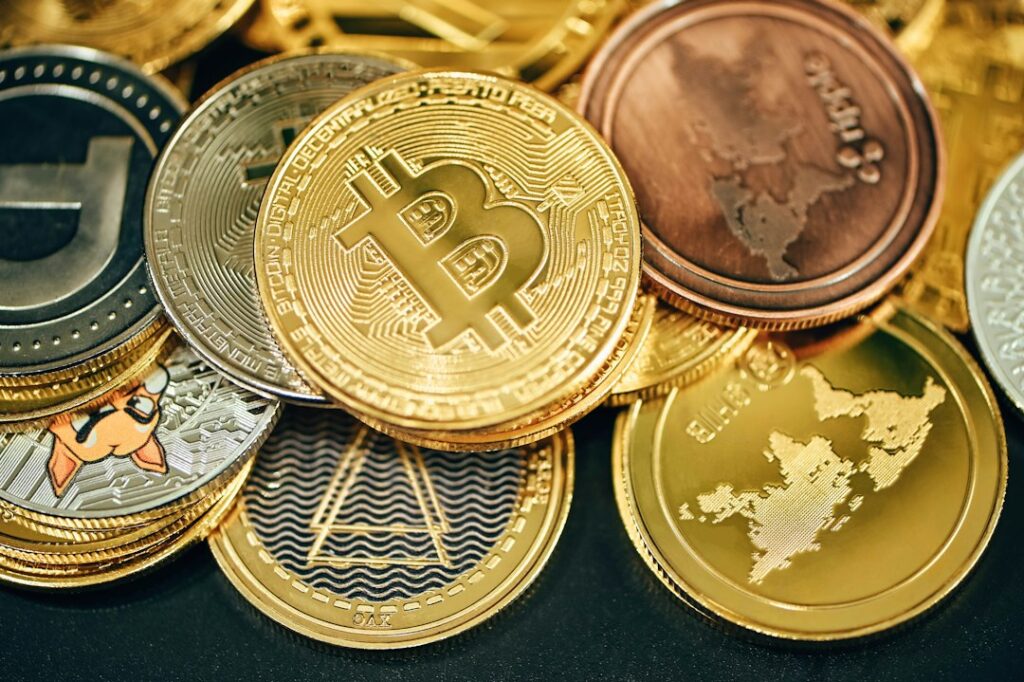
A cryptocurrency is a digital asset that exists on a blockchain, a shared public record of transactions that’s maintained by a network of computers rather than a single bank or government. Cryptography is used to secure transactions and control who owns what.
Unlike money in your bank account, there’s usually no central company that can reverse a transaction, freeze your account or reset your password. That’s a feature for supporters, and a big risk for anyone who makes a mistake.
How does a blockchain work?
Imagine a ledger, a list of every transaction, that thousands of computers around the world each keep a copy of:
- When you send crypto, your transaction is broadcast to the network.
- Network participants verify that you actually own the coins and haven’t already spent them.
- Valid transactions are grouped into a “block” and added to the chain of previous blocks.
- Once confirmed, the transaction is extremely difficult to alter, because it would require changing the record on most of the network at once.
Different blockchains reach agreement in different ways. Bitcoin uses proof of work, where “miners” compete using computing power. Ethereum uses proof of stake, where “validators” lock up coins as collateral to help secure the network.
The main types of crypto
- Bitcoin (BTC): the first and largest cryptocurrency, launched in 2009. It has a fixed maximum supply of 21 million coins, which is why supporters call it “digital gold.”
- Ethereum (ETH): a blockchain that runs programmable “smart contracts,” which power applications such as decentralised finance (DeFi) and NFTs. ETH is used to pay for activity on the network.
- Stablecoins: tokens designed to hold a steady value, usually one US dollar, typically backed by cash and short-term government debt. They’re widely used for trading and payments. A stablecoin is only as reliable as its issuer and reserves, and some have failed.
- Altcoins: the thousands of other cryptocurrencies. Some have genuine projects behind them; many have little real use and are extremely risky.
- Meme coins: tokens driven mainly by internet hype and community, often with no underlying purpose. Prices can rise and collapse within days. Treat them as gambling, not investing.
Why do people buy crypto?
- Speculation: the hope that prices will rise. This is the main reason most people buy.
- A hedge or alternative asset: some see Bitcoin’s limited supply as protection against inflation or currency debasement, though its track record on this is debated.
- Payments and transfers: sending money across borders quickly, especially with stablecoins.
- Using decentralised apps: lending, borrowing and trading without a traditional bank (with significant extra risks).
The real risks of crypto
Before buying, make sure you understand these risks:
- Extreme volatility: crypto prices regularly rise or fall by large percentages in short periods. Even the largest coins have had multiple crashes in their history.
- Losing everything: many coins have gone to zero, and many crypto projects have disappeared.
- Exchange failures: if you keep crypto on a platform that collapses or is hacked, you may lose it. The collapse of the FTX exchange in 2022 left many customers unable to access their funds.
- Limited protection: crypto usually isn’t covered by the deposit insurance or investor compensation schemes that protect bank accounts and traditional investments.
- Irreversible mistakes: send crypto to the wrong address or lose your keys, and there’s usually no way to get it back.
- Scams and fraud: crypto is a favourite tool for scammers (see below).
- Changing regulation: rules on crypto vary widely by country and are still evolving, which can affect prices, platforms and taxes.
How to buy crypto safely: step by step
Step 1: Decide how much you can afford to lose
The golden rule: only put in money you could lose completely without it affecting your life. Before considering crypto, make sure you have an emergency fund, no high-interest debt, and that your core long-term investing is on track. See our guides to budgeting and how to start investing. Many people who do hold crypto keep it to a small slice of their overall investments.
Step 2: Choose a reputable, regulated platform
Most beginners buy through a cryptocurrency exchange or an app. When comparing them, check:
- Registration and licensing with the financial regulator in your country.
- Security track record and features such as two-factor authentication and withdrawal whitelists.
- Fees: trading fees, spreads (the difference between buying and selling prices) and withdrawal fees. Convenient “instant buy” options are often the most expensive.
- Transparency: clear information about who runs the company and how customer assets are held.
In some countries you can also get exposure to Bitcoin and Ethereum through regulated exchange-traded products using an ordinary brokerage account, such as spot Bitcoin ETFs in the US, or crypto exchange-traded notes (ETNs), which UK retail investors have been able to buy since October 2025. That avoids managing wallets, though you don’t own the coins directly and fees apply.
UK readers: crypto firms serving UK customers must be registered with the Financial Conduct Authority (FCA), and you can check the FCA register before signing up. Crypto itself usually isn’t covered by the Financial Services Compensation Scheme (FSCS) or the Financial Ombudsman Service, so if a platform fails or you’re scammed, you may not get your money back.
My experience
I use Coinbase and eToro. Both are large, long-established platforms that operate under financial regulation in the UK and other major markets, offer two-factor authentication and make it straightforward for beginners to buy and sell the major cryptocurrencies. Whichever platform you choose, check it’s registered with the regulator where you live, and compare fees before you buy, because spreads and “instant buy” charges can vary a lot.
Step 3: Secure your account
- Use a strong, unique password and a password manager.
- Turn on two-factor authentication using an authenticator app or security key rather than SMS where possible.
- Never share your login details, codes or recovery phrases with anyone.
Step 4: Starting small
If you decide to buy, many beginners stick to the largest, most established cryptocurrencies rather than chasing small, hyped tokens. Some people buy a small fixed amount at regular intervals (dollar-cost averaging) rather than everything at once, to reduce the impact of sudden price swings.
Step 5: Decide how to store it
Storage is where many beginners get caught out. Read the next section carefully.
Crypto wallets explained
A crypto wallet doesn’t actually hold coins; it holds the private keys that prove you own them and let you move them. Whoever controls the keys controls the crypto.
Custodial vs self-custody
- Custodial (exchange) wallets: the platform holds the keys for you. It’s easy and you can recover your account if you forget your password, but you depend on the platform staying secure and solvent.
- Self-custody (non-custodial) wallets: you hold the keys yourself. You don’t depend on a company, but if you lose your recovery phrase, nobody can help you get your crypto back.
Hot vs cold wallets
- Hot wallets are apps or browser extensions connected to the internet. They’re convenient for small amounts and frequent use, but more exposed to hacking.
- Cold wallets (usually hardware wallets) store keys offline on a small physical device. They’re more secure for larger, long-term holdings.
Protect your recovery phrase
When you set up a self-custody wallet, you’ll get a recovery (seed) phrase, usually 12 or 24 words. Anyone who has these words can take your crypto.
- Write it down on paper (or metal) and store it somewhere safe and private.
- Never type it into a website, email, cloud document, photo or chat, and never share it with anyone, including “support staff.”
- Only buy hardware wallets directly from the manufacturer or an authorised seller.
- For a step-by-step setup guide, see how to keep your crypto safe.
Common crypto scams to avoid
- Guaranteed returns: any scheme promising fixed, high or guaranteed profits is almost certainly a scam.
- Romance and “pig butchering” scams: a new online friend or love interest introduces you to a “great investment platform.” The platform is fake, and the money disappears.
- Fake giveaways and impersonation: “Send 1 coin and get 2 back” from accounts pretending to be celebrities or companies.
- Phishing: fake websites, emails and apps that steal your login details or recovery phrase.
- Fake support: scammers posing as exchange or wallet support who ask for your recovery phrase or remote access to your device.
- Pump-and-dumps and rug pulls: promoters hype a small token, then sell their holdings or abandon the project, leaving buyers with worthless coins.
- AI deepfakes: fake videos of well-known people endorsing crypto schemes are increasingly common. Be wary of any video or advert where a famous face promises easy crypto profits. Our guide to AI scams targeting your money shows how to spot them.
If you’re pressured to act fast, asked to keep it secret, or asked for your recovery phrase, stop. Legitimate platforms will never ask for your seed phrase.
Do you have to pay tax on crypto?
In many countries, yes. Selling crypto for a profit, swapping one coin for another, or spending crypto can be taxable events, and crypto received as income may also be taxed. Rules differ by country and change regularly.
- United Kingdom: HMRC treats most crypto as property for Capital Gains Tax. Selling, swapping or spending it counts as a disposal, and gains above the annual exempt amount (£3,000) may be taxable. UK crypto platforms are also starting to report customer transactions to HMRC under new international rules, so assume your activity is visible.
- United States: the IRS treats digital assets as property, so gains and losses are reported when you sell, swap or spend them. Brokers now report crypto sales to the IRS on Form 1099-DA.
Keep records of every transaction (date, amount, value and fees) and check your tax authority’s official guidance, or use crypto tax software or an accountant.
My approach: crypto is the small, high-risk slice
Only about 5% of my portfolio is in crypto. The rest is in ETFs, which I rely on for steady, long-term growth. Crypto can rise fast, but it can fall just as quickly, and I don’t want my financial future riding on something that volatile.
That small allocation also shapes how I store it. Because my crypto holdings are modest, I keep them on the regulated platforms I use rather than in a hardware wallet. If you’re heavily invested in crypto, it’s a different story: keeping large amounts on any exchange is a risk, because exchanges can be hacked or fail. That’s when a hardware wallet, kept offline and away from hackers, becomes essential.
The lesson I’d share with any beginner: decide your crypto slice before you buy, keep the core of your investing in diversified, low-cost funds, and let the size of your holdings decide how seriously you need to approach storage. If you’re weighing up those funds, start with our guide to index funds vs ETFs.
Frequently asked questions
Is crypto a good investment?
Crypto is highly speculative. Some early buyers made large gains, but many people have also lost money. Its long-term value is uncertain. If you choose to buy, treat it as a high-risk part of a broader plan and only invest what you can afford to lose.
How much should I put into crypto?
Only an amount you could lose completely without affecting your finances. Many people who hold crypto keep it to a small percentage of their total investments, after building an emergency fund and paying off high-interest debt.
What’s the safest way to buy crypto?
Use a well-established, regulated platform in your country, secure your account with strong passwords and two-factor authentication, start with a small amount, and learn how to store your crypto safely.
Should I keep my crypto on an exchange?
Small amounts you trade often can be kept on a reputable exchange for convenience. For larger, long-term holdings, many people prefer a self-custody hardware wallet, but only if they’re confident managing their recovery phrase safely.
Can crypto go to zero?
Yes. Many cryptocurrencies have already become worthless. Larger, more established coins are generally considered less likely to disappear, but there are no guarantees.
The bottom line
Crypto is a fascinating technology and a genuinely high-risk asset. If you decide to get involved, get your financial foundations in place first, use a reputable platform, start small, secure your accounts and recovery phrase, and never invest more than you can afford to lose. Above all, be deeply sceptical of anyone promising easy profits.
This article is for general information and education only and does not constitute investment, tax or financial advice. Cryptoassets are high-risk and you could lose all the money you invest. Read our disclaimer.