








Last updated:
The end of the year is busy enough without thinking about money. But a few hours spent on your finances in December can save you hundreds, sometimes thousands, of dollars, because many tax breaks and benefits have a hard December 31 deadline. Miss it, and the opportunity is gone for the year.
This checklist follows US rules and the 31 December deadline. In the UK, the tax year ends on 5 April, so ISA and pension deadlines follow that date instead; see the section for readers outside the US.
Work through this year-end financial checklist before the holidays take over. Not every item will apply to you; skip what doesn’t and focus on what does.
The checklist at a glance
- Review your year: income, spending and net worth
- Boost your retirement contributions
- Spend your FSA balance
- Take required minimum distributions (RMDs)
- Harvest investment losses
- Make charitable donations
- Check your tax withholding and estimated payments
- Review your benefits and insurance
- Check your credit report
- Set your money goals and contributions for next year
Also in this guide
1. Review your year: income, spending and net worth
Before making any moves, take stock. Pull together your bank and card statements, your latest pay stub and your investment balances, and answer three questions:
- How much did you earn this year, including side income?
- Where did your money go? Which categories were higher than you expected?
- What’s your net worth (everything you own minus everything you owe), and how has it changed since last year?
This takes about an hour and makes every other decision on this list easier. If you don’t have a budget yet, our step-by-step budgeting guide will help you build one for the new year.
My experience
My year-end review almost always reveals the same thing: the numbers tell a slightly different story from the one I was telling myself throughout the year.
There are usually a few spending categories that ended up costing more than I expected, a few financial goals that made more progress than I realised, and at least one subscription or recurring expense that I’d completely forgotten about.
What I find most useful isn’t the individual numbers. It’s seeing the bigger picture. Did I actually direct money towards the things I said were important at the start of the year? Did my spending reflect my priorities? Did my net worth move in the right direction?
I’ve found that a simple year-end review often uncovers opportunities for improvement that are easy to miss when you’re focused on day-to-day life.
2. Boost your retirement contributions
Deadline: December 31 for workplace plans
Contributions to a 401(k), 403(b) or most 457(b) plans count for the calendar year in which they come out of your paycheck. If you’re below the annual limit and can afford it, ask your payroll or HR team whether you can raise your contribution percentage for your final paychecks.
- Many people aim to contribute at least enough to get the full employer match.
- If you’re 50 or older, you can make additional catch-up contributions, and people aged 60 to 63 may be eligible for a larger “super catch-up” if their plan allows it.
- Self-employed? Rules and deadlines for Solo 401(k) and SEP IRA plans differ, and some steps must be taken by year-end, so check with your provider or tax professional.
Good to know: you usually have until the tax filing deadline in April to make IRA and HSA contributions for the current tax year, so those don’t need to be rushed before December 31. Check the current contribution limits on IRS.gov before you adjust anything.
3. Spend your FSA balance
Deadline: usually December 31 (check your plan)
Flexible Spending Accounts are generally “use it or lose it.” Some employers offer a short grace period into the new year or let you carry over a limited amount, but anything beyond that is forfeited.
Log into your FSA account to check your balance, and if you have money left, consider eligible expenses such as:
- Doctor, dentist and eye appointments you’ve been putting off
- Prescription glasses, contact lenses or prescription sunglasses
- First-aid supplies and many over-the-counter medicines
- Eligible health devices, such as thermometers or blood pressure monitors
Dependent care FSAs have their own rules. Make sure you’ve submitted claims for eligible childcare costs.
4. Take required minimum distributions (RMDs)
Deadline: generally December 31
If you’re old enough to be subject to required minimum distributions from traditional IRAs or workplace retirement plans (currently starting at age 73 for many people), you generally must withdraw at least the required amount by December 31. There’s an exception for your very first RMD, which can be delayed until April 1 of the following year, though that means taking two distributions in one year.
Missing an RMD can trigger a significant IRS penalty, so check with your account provider that it’s scheduled. If you’ve inherited a retirement account, different RMD rules may apply.
5. Harvest investment losses
Deadline: December 31 (trades must be completed)
If you have investments in a regular taxable brokerage account that are worth less than you paid for them, selling them can create a capital loss. That loss can offset capital gains you’ve realised this year, and if your losses exceed your gains, you can usually use up to $3,000 of the excess to reduce your ordinary income, carrying any remainder forward to future years.
Watch out for the wash-sale rule: if you buy the same or a “substantially identical” investment within 30 days before or after the sale, the loss is disallowed for now. Many investors switch into a similar but not identical fund to stay invested.
Tax-loss harvesting doesn’t apply to tax-advantaged accounts such as 401(k)s and IRAs. If you’re unsure, a tax professional can tell you whether it makes sense for you. New to investing? Start with our guide on how to start investing.
6. Make charitable donations
Deadline: December 31
Donations must generally be made by December 31 to count for this tax year. A few tips:
- Get a receipt for every donation, and a written acknowledgement from the charity for larger gifts.
- Check the charity is eligible using the IRS Tax Exempt Organization Search tool.
- Some people donate appreciated investments instead of cash, because they may avoid capital gains tax on the growth and still deduct the full market value, subject to limits.
- Age 70½ or older? A Qualified Charitable Distribution (QCD) sent directly from your IRA to a charity can count toward your RMD without adding to your taxable income.
Tax rules for charitable deductions have changed in recent years, including how they work for people who don’t itemize. Check IRS.gov or ask a tax professional how the current rules apply to you.
7. Check your tax withholding and estimated payments
Nobody likes a surprise tax bill in April. Use the free IRS Tax Withholding Estimator to check whether enough tax is being taken from your pay. This matters especially if:
- You started a side hustle or freelance work this year
- You changed jobs, got married or had a child
- You sold investments for a large gain
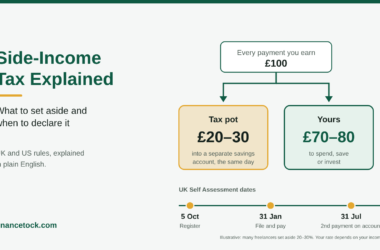
If you’re self-employed or have significant untaxed income, remember that the fourth-quarter estimated tax payment is usually due in mid-January. Side hustlers: set aside a percentage of every payment in a separate account so tax time isn’t a shock.
8. Review your benefits and insurance
Many employers hold open enrollment in November or December, and it’s easy to click “keep the same” without thinking. Before your deadline:
- Health insurance: compare plans based on how much care you actually expect to use next year.
- HSA eligibility: if you choose a qualifying high-deductible plan, an HSA can be a powerful tax-advantaged savings tool.
- FSA elections: decide next year’s amount carefully, based on expenses you’re confident you’ll have.
- Life and disability insurance: check your coverage still fits your family’s needs.
- Beneficiaries: make sure the named beneficiaries on your retirement accounts and life insurance are up to date, especially after a marriage, divorce or new child.
Also review car, home and renters insurance. Shopping around once a year can often lower your premiums.
9. Check your credit report
Errors on your credit report can cost you money through higher interest rates. You can get free credit reports from all three major bureaus (Equifax, Experian and TransUnion) at AnnualCreditReport.com, the official site.
- Check for accounts you don’t recognise, incorrect late payments or wrong personal details.
- Dispute any errors directly with the credit bureau.
- If you’re not planning to apply for credit soon, consider a free credit freeze to protect against identity theft.
10. Set your money goals and contributions for next year
Finally, look ahead. A few decisions now will make next year easier:
- Set two or three specific goals, for example “save $3,000 for an emergency fund” or “pay off my credit card by June.”
- Update your contribution rate for next year’s new retirement contribution limits, and set up automatic transfers to savings on payday.
- Cancel subscriptions you no longer use, before they renew in January.
- Plan for known costs: annual insurance premiums, car maintenance, travel and next year’s holidays. Divide them by 12 and save monthly.
- Schedule a quarterly money check-in in your calendar now.
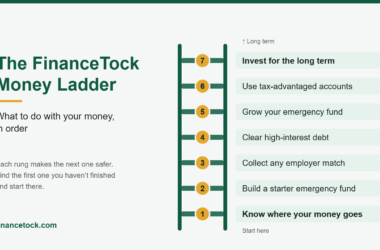
Not sure where to start? Our guides to building an emergency fund and budgeting walk you through it.
My experience
When it comes to financial goals, I’ve learned that simpler is usually better.
Earlier on, I would create long lists of financial targets for the new year. The problem was that too many goals often meant very little progress on any of them. These days I prefer to focus on a handful of priorities that will have the biggest impact.
That might mean increasing retirement contributions, improving my emergency fund, reducing unnecessary spending or setting aside more money for future projects and investments.
The biggest lesson I’ve learned is that meaningful financial progress rarely comes from one major change. More often, it comes from small improvements repeated consistently throughout the year.
Bonus: a few more things to consider
- Roth conversions: if you expect to be in a higher tax bracket later, converting part of a traditional IRA to a Roth IRA before December 31 may make sense. Conversions are taxable, so get advice first.
- 529 plan contributions: some states offer a state tax deduction for contributions made by December 31.
- Use credit card rewards and gift cards before points expire or you forget about them.
- Organise your tax documents: create a folder (physical or digital) for W-2s, 1099s, receipts and donation records as they arrive.
Not in the US?
Tax years and deadlines differ by country. In the UK, for example, the tax year ends on April 5, so ISA allowances and pension contributions follow that date rather than December 31. The principles are the same: review your year, use your tax-advantaged allowances and set goals. Check your local tax authority for exact deadlines.
What I like about year-end financial reviews
One thing I’ve come to appreciate is that a year-end financial review isn’t really about looking backwards. It’s about making better decisions going forward.
This is the one time of year when many people naturally stop and assess where they are financially. Taking advantage of that moment can make a significant difference because actions taken before December 31 often have tax, retirement and planning benefits that disappear once the calendar turns.
Even if the year didn’t go exactly as planned, a review gives you a valuable reset point. Instead of carrying habits and assumptions into January, you can start the new year with a clearer understanding of what’s working and what needs attention.
Sources and further reading
Last updated: November 2026.
Frequently asked questions
What’s the deadline for 401(k) contributions?
Employee contributions to a 401(k) must generally come out of a paycheck dated by December 31 to count for that year. Check with your employer’s payroll team about the cut-off for changing your contribution rate.
Can I still contribute to an IRA after December 31?
Yes. You can usually make IRA contributions for a tax year up until the tax filing deadline the following April. The same generally applies to HSA contributions.
What happens to unused FSA money?
It’s usually forfeited, unless your employer offers a grace period or allows a limited carryover into the next year. Check your plan’s rules.
Is it worth doing a year-end financial review if I don’t have much money?
Absolutely. Using an FSA balance, getting your full employer match or catching an error on your credit report can matter even more when money is tight.
The bottom line
A little effort in December can pay off all year. Block out an afternoon, grab a coffee and work through this checklist. Even ticking off three or four items, such as increasing retirement contributions, reviewing your withholding, using any remaining FSA funds or checking your credit report, can leave you in a stronger financial position before the new year begins.
One thing I’ve learned is that financial progress rarely comes from dramatic changes. More often, it’s the result of regularly reviewing your finances and making small adjustments before problems have a chance to grow.
The end of the year provides a natural opportunity to do exactly that.
You don’t need a perfect financial plan to benefit from a year-end review. You simply need an honest picture of where you are today and a clear idea of where you’d like to be next year. That’s often enough to help you make better decisions, reduce financial stress and start the new year with confidence.
This article is for general information only and isn’t tax, legal or financial advice. Tax rules, limits and deadlines change and depend on your circumstances; check IRS.gov or consult a qualified tax professional. Read our disclaimer.